

September 14, 2021, Posted by Absolute Destruction
Last Updated:
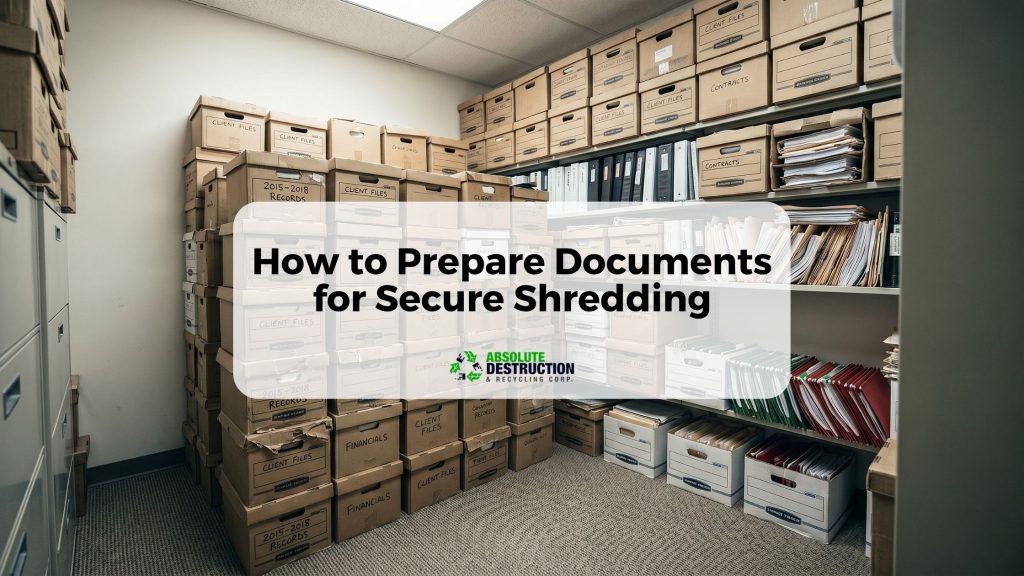
Stacks of old paperwork have a way of quietly piling up until they become impossible to ignore.
A few filing boxes turn into packed storage rooms filled with outdated employee files, invoices, contracts, tax paperwork, and confidential records that should have been securely destroyed years ago. The longer those documents sit untouched, the greater the potential privacy and compliance risks become.
How to prepare documents for shredding refers to the process of organizing, separating, and securely handling confidential paperwork before professional destruction takes place. Proper document shredding preparation helps businesses and individuals protect sensitive information, reduce clutter, and ensure records are securely destroyed.
At Absolute Destruction, we help businesses and individuals across Ontario simplify secure document disposal every day. Whether you are preparing for a one time office purge or setting up ongoing shredding services, knowing how to properly prepare documents beforehand can make the entire process faster, safer, and far more efficient.
The Biggest Mistake Businesses Make With Old Documents
One of the most common risks we see is businesses holding onto confidential paperwork far longer than necessary.
Old employee files, financial records, customer information, contracts, tax paperwork, medical forms, and internal reports often remain stored simply because nobody has had time to sort through them properly. Unfortunately, unmanaged records can create unnecessary privacy and compliance risks.
Paper documents still contain highly sensitive information, including:
- Banking details
- SIN numbers
- Payroll information
- Customer records
- Employee data
- Health information
- Legal agreements
- Proprietary business information
Throwing these documents into regular garbage or recycling bins is never enough. Professional shredding helps ensure confidential information is permanently destroyed instead of remaining vulnerable to unauthorized access.
That is why many Ontario businesses rely on secure document shredding services to safely dispose of records while maintaining stronger privacy protection standards.
Start With a Simple Sorting System
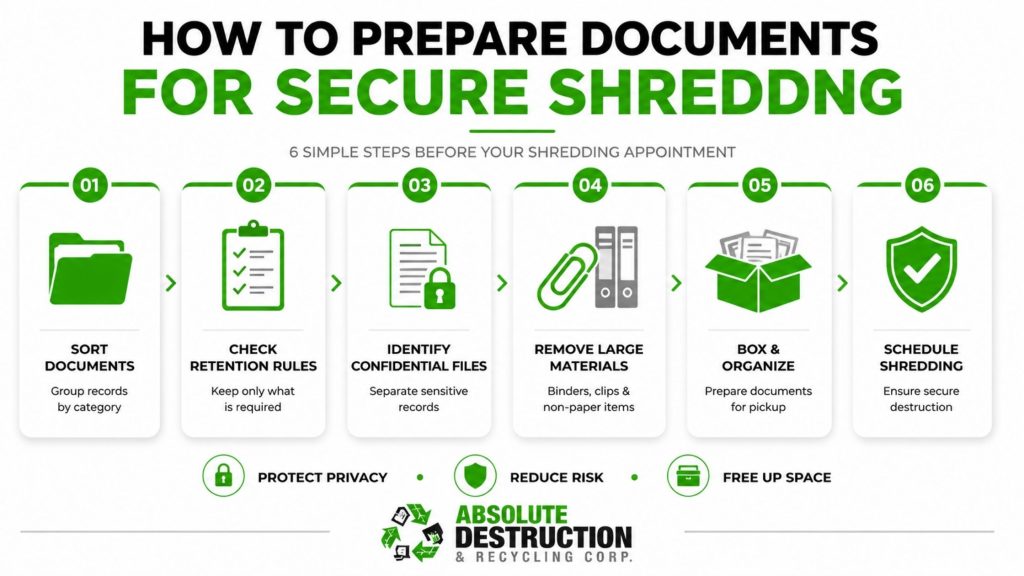
Before shredding begins, it helps to create a straightforward sorting process. Trying to tackle every document individually can quickly become exhausting, especially during large office cleanouts. Instead, start by grouping paperwork into broad categories first.
Some common categories include:
- Financial documents
- Human resources records
- Client or patient files
- Tax documentation
- Legal paperwork
- Outdated operational records
- Marketing materials
- Personal paperwork
Sorting and categorizing documents early helps reduce confusion later and makes it easier to identify what should be retained versus destroyed.
For businesses, this is also a good opportunity to review internal retention policies and ensure records are not being kept beyond required timelines.
Know What Should Actually Be Shredded
Not every piece of paper needs destruction, but many organizations underestimate how much confidential information exists in everyday paperwork.
Documents commonly prepared for shredding include:
- Old invoices
- Employee files
- Medical records
- Credit card statements
- Utility bills
- Tax records
- Insurance paperwork
- Client files
- Bank statements
- Payroll documents
- Expired contracts
- Shipping records
- Internal memos
For households, the same principle applies. Identity theft often starts with discarded personal paperwork that was never properly destroyed.
According to the Government of Canada’s identity theft guidance, improperly discarded personal documents can increase the risk of fraud and identity theft.
This is why many homeowners choose to safely destroy personal paperwork instead of relying on small home shredders that can jam easily and leave partially readable strips behind.
Retention Policies Matter More Than Many Realize
One of the smartest things a business can do before shredding documents is verify retention timelines.
Different industries have different legal and operational requirements for record storage. Certain tax documents, employee files, healthcare records, or legal paperwork may need to be retained for specific periods before destruction is permitted.
Reviewing retention policies before shredding helps businesses:
- Reduce compliance risks
- Avoid accidental destruction of required records
- Maintain stronger audit readiness
- Improve overall records management
- Free up storage space more strategically
The Canada Revenue Agency record retention guidelines also outline how long certain business records should be kept before they can legally be destroyed.
This step becomes especially important during mergers, office relocations, digitization projects, or large scale document cleanouts.
Remove Large Binders and Non Paper Materials First
One of the easiest ways to speed up shredding preparation is removing bulky non paper materials ahead of time.
At Absolute Destruction, some small fasteners like staples and paper clips can typically remain attached. However, larger items should still be separated before pickup, including:
- Large binder clips
- Thick binders
- Plastic folders
- Hanging file frames
- Electronics mixed into paper boxes
- Batteries
- Large metal objects
Preparing physical documents this way helps streamline the destruction process and reduces delays during service appointments.
If your organization is handling high volumes of archived paperwork, this preparation stage becomes especially important when using bulk document shredding services for large purges or long overdue records cleanouts.
Educating Staff on Shredding Procedures Helps Reduce Risk
For businesses, one of the most overlooked parts of secure document disposal is employee education. Without clear internal procedures, staff may accidentally mix confidential and non confidential records together or dispose of documents improperly.
Simple internal shredding guidelines can help employees understand:
- Which documents require secure destruction
- What should be retained
- Where shredding bins are located
- How chain of custody procedures work
- What materials cannot be placed into shredding containers
Even brief training sessions can significantly reduce document handling risks and improve overall information security practices across the workplace.
The Office of the Privacy Commissioner of Canada also recommends implementing proper safeguards and secure disposal procedures when handling personal information within organizations.
This becomes even more important for organizations handling client data, healthcare records, financial information, or regulated documentation.
On Site or Off Site Shredding? Choose the Right Fit
Every organization has different comfort levels when it comes to confidential document destruction.
Some businesses prefer on site shredding, where documents are destroyed directly at their location using mobile shredding trucks. Others choose off site destruction at secure facilities.
Both options can support strong security standards when handled by a professional provider with secure chain of custody procedures.
The right choice often depends on:
- Volume of documents
- Industry requirements
- Internal privacy policies
- Convenience
- Budget
- Operational workflow
Businesses looking for ongoing protection often use secure business document shredding as part of their broader information security strategy instead of waiting until paperwork becomes unmanageable.
Paper Is Not the Only Security Risk
Many organizations focus heavily on paper records while overlooking electronic storage devices. Old hard drives, USB devices, backup tapes, phones, and outdated electronics often contain confidential information long after they stop being used.
Simply deleting files or formatting devices does not permanently remove data. That is why secure destruction should also include electronic devices when necessary. At Absolute Destruction, our electronic data destruction services help businesses securely dispose of sensitive digital information alongside physical records.
The RCMP’s identity theft prevention guidance also advises Canadians to securely destroy documents and devices containing sensitive information to help reduce the risk of data misuse.
Combining paper shredding with electronics destruction creates a far more complete security approach for modern organizations.
Large Office Purges Require a Different Approach
Preparing for large office cleanouts takes more planning than routine shredding pickups. When businesses relocate, downsize, digitize records, or close locations, the volume of paperwork can quickly become overwhelming without a structured plan.
For large purges, it helps to:
- Assign internal coordinators
- Create clear sorting zones
- Label retention versus destruction boxes
- Schedule pickups strategically
- Prepare staff in advance
- Identify sensitive departments first
Organizations preparing for large office clean-outs often benefit from working directly with experienced shredding professionals who can help streamline logistics and maintain secure handling throughout the process.
Why DIY Shredding Usually Creates More Problems
Small office shredders may seem convenient initially, but they rarely provide the same level of efficiency, security, or reliability as professional shredding services.
DIY shredding often leads to:
- Employee time loss
- Frequent machine jams
- Inconsistent destruction quality
- Higher long term costs
- Security vulnerabilities
- Limited destruction capacity
Professional shredding eliminates these issues while helping organizations maintain stronger confidentiality standards and documented destruction procedures.
At Absolute Destruction, our secure chain of custody processes help protect documents from collection through final destruction, helping businesses feel more confident that confidential information is handled responsibly every step of the way.
Scheduling Your Shredding Service the Smart Way
Once documents are sorted and prepared, scheduling the service itself becomes straightforward.
To make the process smoother, businesses should estimate:
- Approximate number of boxes
- Type of materials being destroyed
- Pickup location details
- Building access requirements
- Preferred service dates
- Any specialty destruction needs
Whether you need recurring service or a one time purge, it helps to schedule a secure shredding pickup before storage areas become overcrowded or compliance risks increase.
Key Takeaways
- Proper document shredding preparation helps businesses reduce privacy risks, improve organization, and simplify secure disposal processes.
- Sorting records before destruction makes it easier to identify confidential materials, follow retention policies, and avoid accidental disposal of important documents.
- Professional shredding services offer stronger security, better efficiency, and more reliable destruction than small office or home shredders.
- Secure document destruction should include both paper records and electronic devices that may still contain sensitive information.
- Working with a professional provider like Absolute Destruction helps ensure confidential information remains protected through secure chain of custody procedures and certified destruction processes.
Frequently Asked Questions
What documents should be shredded instead of recycled?
Any document containing personal, financial, legal, medical, or confidential business information should typically be shredded instead of placed in regular recycling. This can include employee files, invoices, tax documents, bank statements, contracts, and customer records that could expose sensitive information if accessed improperly.
Do I need to remove staples or paper clips before shredding?
In many cases, small staples and paper clips can remain attached to documents before shredding. However, larger materials such as binders, hanging folders, plastic covers, and bulky clips should usually be removed beforehand to help streamline the shredding process and avoid delays during destruction.
Why is professional shredding safer than using office shredders?
Professional shredding services provide secure chain of custody procedures, industrial grade shredding equipment, and certified destruction processes that help reduce the risks associated with DIY shredding. Small office shredders can leave readable strips behind, jam frequently, and consume valuable employee time during large cleanouts.
How often should businesses schedule document shredding services?
The right shredding schedule depends on document volume, industry regulations, and internal retention policies. Some businesses benefit from recurring weekly or monthly service, while others may only require occasional purge shredding during office cleanouts, relocations, or records management projects.
Can old hard drives and electronics be destroyed with paper records?
Yes. Many organizations combine paper shredding with electronic destruction services to help protect both physical and digital information. Hard drives, USB devices, phones, backup media, and other electronics can still contain sensitive data even after files appear deleted.
Secure Document Destruction Protects More Than Office Space
Many people initially contact us because they want to free up office space. By the end of the process, they often realize secure shredding is really about something much bigger.
It is about protecting employees, customers, businesses, reputations, and personal identities, reducing unnecessary risk, and handling confidential information responsibly from beginning to end.
At Absolute Destruction, we help organizations across Ontario simplify secure document disposal with certified destruction processes, strict chain of custody procedures, and convenient service options tailored to different industries and document volumes.
The Information and Privacy Commissioner of Ontario also emphasizes that secure destruction procedures play an important role in protecting confidential information throughout its entire lifecycle.
Whether you need one time purges, recurring pickups, hard drive destruction, or compliant document shredding solutions, proper preparation makes the entire process safer, faster, and more effective.
Because when confidential information is involved, secure destruction should never feel like an afterthought.