

June 20, 2022, Posted by Absolute Destruction
Last Updated:
Key Takeaways
- Follow a records retention policy to decide what to keep and what to destroy.
- Protect PII, financial records, and proprietary information with secure document management.
- Choose the right disposal method, from in-house shredders to a professional shredding company.
- Secure digital records disposal too, including cloud storage and databases.
- Keep a certificate of destruction for compliance and peace of mind.
Is your business packed with a considerable amount of documents you no longer need? While it’s tempting to toss the files into the garbage can or recycling bin, business documents are more delicate. They might carry sensitive information about your suppliers, customers, or employees. And not using proper methods to dispose of them can result in adverse outcomes and legal implications.
So how do you get rid of thousands of unwanted files without getting into trouble? States have established specific laws about document retention. But they all aim to secure business documents and prevent information leaks that can lead to criminal activity.
Below we’ve put together essential tips to help you dispose of your business documents more securely.
Ensure That Your Staff Is Trained in Handling Confidential Data
Before sorting through your business documents and disposing of them, you need to understand what’s sensitive and what isn’t. Everyone in your organization must be on the same page regarding handling sensitive information and the types of business documents to destroy.
Remember that protecting your company’s data should be a team effort. Unfortunately, many businesses don’t realize that their employees are at the most significant risk of leaking confidential information.
It’s crucial to ensure your employees are well-trained about data confidentiality. A lack of training can result in improper data disposal and management. Confidential documents that may require additional security measures can include:
- The company’s financial and medical records
- Employees’ social security numbers
- Customers’ credit card numbers
- Client contract details or legal documents
- Internal procedure manuals
- Office plans and IDs
- Intellectual property
Before you get rid of any of these documents, check out the appropriate time to dispose of them or whether you may ever need them again in the future.
How to Decide Which Business Documents to Keep and Which to Dispose Of
Before destroying any records, determine whether they have reached the end of their document-retention timeline. A clear records retention policy helps businesses organize business files by document type, making it easier to know what should be archived, what should remain accessible, and what can move to secure disposal. This reduces the risk of destroying important records too soon while preventing confidential information from accumulating unnecessarily.
Different documents have different retention requirements based on legal, financial, and operational needs. Reviewing records by category instead of individually creates a more consistent process and simplifies future audits.
Documents That Often Require Longer Retention
- Tax records, bank records, and financial documents should be retained in accordance with Canada Revenue Agency (CRA) recordkeeping requirements.
- Personnel files containing personally identifiable information (PII), payroll records, and employment documents should follow applicable employment and privacy legislation before disposal.
- Legal documents, contracts, and insurance information should be kept until contractual obligations, limitation periods, or regulatory requirements have expired.
- Medical records, where applicable, must follow the retention requirements established by provincial legislation and professional regulatory bodies.
- Proprietary information, such as client lists, pricing strategies, intellectual property, and confidential business records, should remain protected until approved for secure destruction.
Once records have reached the end of their retention period, they should be removed from storage promptly and transferred to a secure document destruction process rather than left in filing cabinets or storage rooms.
Secure Storage of Confidential Paper Documents
The risks of any confidential data and physical documents going missing, either by accident or criminal activity, are high. This is especially true if your company has a lot of paper-based business records that you need to keep for a lengthy time.
Business owners must protect those sensitive documents from the wrong hands to ensure they’re at as little risk of a data breach, fraud, and theft. You can achieve this by implementing data protection procedures within your organization.
But, for a start, secure storage for those paper documents while they’re not due for document disposal. Note that confidential information like bank statements must be adequately secured and easy to access or retrieve in case of audits. Here are some suggestions you might want to consider:
- Secure your facility with quality doors, locks, and security systems like alarms or CCTV
- Invest in secure offsite confidential storage for data needing longer retention time
- Restrict access to the company’s sensitive information
Document Management and Decluttering
A messy workspace is a significant security liability. To build an organized environment, your business needs a comprehensive document life cycle policy that guides the handling of paper from its creation to its final secure document disposal. Launching an organizational effort to declutter office plan layouts keeps desks clean and prevents accidental exposure of sensitive items left out in the open.
1. CREATION ──► 2. MANAGEMENT
(Budgets, Reports, Payroll) (Secure Storage & Access)
│
▼
4. DISPOSAL ◄── 3. RETENTION
(Shred-it-All Destruction) (Policy-Driven Timelines)
As part of your daily data management process, separate your daily files systematically based on their specific operational lifecycle:
- Operating Papers: Routine internal reports, old annual budgets, and simple training and operation manuals can accumulate quickly, hiding critical operational documents.
- Highly Sensitive Assets: High-value corporate files like employee payroll records and original bank account statements must be kept under tight locks during their mandatory document retention windows.
To eliminate guesswork and completely remove employee error, many Canadian firms implement a permanent shred-it-all policy. This ensures that every single piece of discarded paper goes directly into a secure bin for total document destruction, removing the risky decision of what should be recycled versus what should be shredded.
Review Your Confidential Waste Disposal
Once the retention period and intended purpose of a confidential document are over, your company’s data or paper records become confidential waste. Document shredding and secure, confidential waste disposal are effective preventative measures against security and data breaches.
But before disposing of anything, always check your local government’s rules and regulations on document destruction in London, Ontario, or anywhere in Canada. Whether stored in digital storage or physical media like hard drives, it’s vital to have appropriate technical measures in place to eliminate any unwanted sensitive documents.
Consider the following factors when reviewing your confidential waste disposal.
- Locate areas where you create confidential information.
- Determine the volume of confidential waste and how often you should dispose of it.
- Consider where and how your company disposes of and collects documents before destruction.
How to Keep Sensitive Papers Safe Before Shredding Day
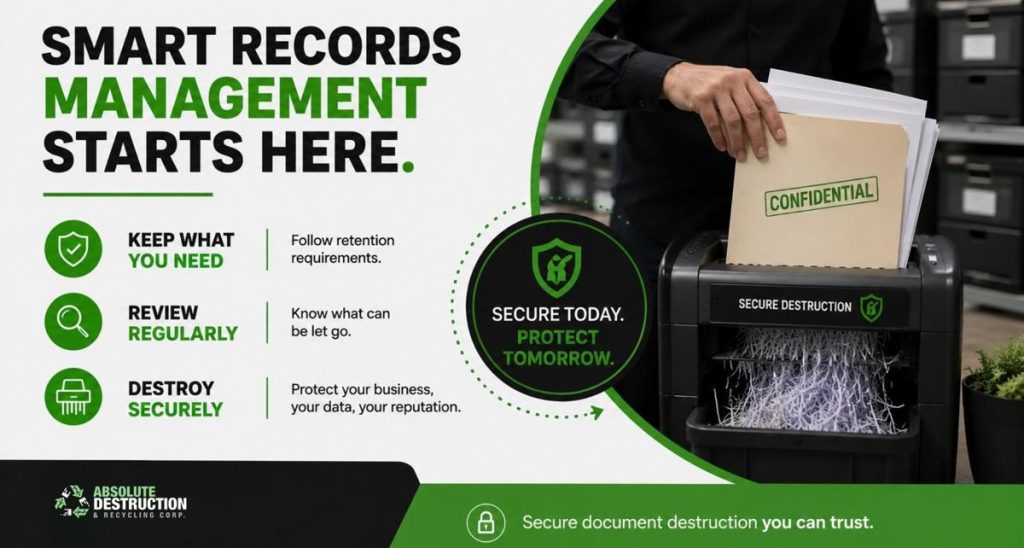
Before your confidential documents hit their official destruction dates, they need a safe place to wait. Leaving sensitive paperwork sitting in open recycling boxes or piled on an unattended desk is an invitation for unauthorized access, and a major data breach waiting to happen.
Think of secure storage as your first line of defence. By setting up a clear system for holding sensitive files, you protect your business reputation and give your team peace of mind:
- Use locked collection bins: Place a locked collection bin or secured console in high-traffic office areas so employees can safely deposit confidential paper documents like void cheques or financial records.
- Limit physical access: Restrict entry to rooms housing sensitive personnel files, client agreements, or proprietary business documents to authorized staff only.
- Separate long-term archives: Store files that are awaiting their end-of-retention period in a dedicated, secure off-site facility rather than cluttering active workspaces.
Why Digital Files Need Secure Disposal, Too
Cleaning out your office filing cabinets is a huge win, but don't forget about the data living on your screens. Proper digital records disposal is just as crucial as destroying paper documents, especially when you are handling sensitive customer data or company financials.
Moving to a digital workflow makes work easier, but dragging a file to the computer trash bin does not permanently delete it. True digital cleanup requires a clear process to keep your networks safe:
- Audit electronic storage routinely: Run scheduled audits of digital information to locate outdated digital files sitting in databases or cloud storage.
- Digitize paperwork safely: Only digitize paper documents when your electronic file systems are encrypted, backed up, and restricted to authorized users.
- Track your cleanup efforts: Maintain a complete audit trail that logs exact destruction dates for both electronic records and physical paperwork.
Destroy retired hardware physically: When upgrading office tech, make sure to physically destroy devices like old IT equipment, hard drives, and storage devices so digitized data can never be recovered.
Risks of Improper Disposal
The consequences of throwing sensitive corporate paperwork directly into a standard trash can or local recycling bin can be financially devastating. Tossing intact files out with the daily garbage creates an immediate security gap, inviting unauthorized access from data thieves looking to exploit your trade secrets or customer data.
Improper handling of sensitive materials drastically increases your exposure to a severe data breach, exposing your firm to deep reputational damage that can take years to recover from.
A major data privacy breach can trigger several difficult problems:
- Consumer Exploitation: Stolen employee data or client records can lead directly to targeted identity theft, creating immense stress for your teams and customers.
- Corporate Exposure: Discarding sensitive corporate financial records or proprietary project designs leaves your vital information security vulnerable to corporate espionage.
- Regulatory Penalties: Negligent waste habits regularly spark invasive legal investigations from privacy commissioners, causing substantial operational downtime and high compliance fines. Under Canadian federal guidelines, a business must report instances where data loss creates a real risk of significant harm to individuals, meaning a single trash bin mistake can invite strict federal oversight.
These data security risks are not just limited to paper files. Discarding old storage devices, legacy backup tapes, or outdated IT equipment without verified physical destruction leaves a trail of readable data that hackers can easily exploit. If your workplace is preparing for an upgrade, checking the official federal guide on how to safely contain a privacy breach at your business highlights exactly how quickly un-shredded data assets can turn into active corporate liabilities.
Secure Disposal Methods for Confidential Business Documents
Once records reach their approved destruction dates, they should be removed from storage through a secure, documented process. Simply placing confidential paper documents in recycling or garbage bins can expose sensitive information to unauthorized access. A secure disposal program protects business information from collection through final destruction while supporting internal security policies and compliance requirements.
Many businesses begin by placing locked collection bins or a secured console throughout the workplace. Combined with a clean desk policy, employees can dispose of confidential documents as soon as they are no longer needed instead of leaving them on desks or in unsecured filing areas.
Professional Shredding Options
The right shredding method often depends on document volume, security requirements, and how your business operates.
- On-site destruction allows documents to be shredded at your location using a mobile shredding truck. This option is ideal for organizations that prefer to witness the shredding process before the material leaves the property.
- Off-site destruction involves securely transporting sealed collection bins to a monitored secure shredding facility. Throughout the process, a documented chain of custody tracks materials from collection to final destruction.
Many professional providers also offer hard drive and media destruction services for obsolete computers, servers, backup tapes, USB drives, and other storage devices. Physically destroying electronic media helps prevent sensitive digital files and business data from being recovered after equipment has been retired.
Following commingled shredding or media destruction, businesses receive a Certificate of Destruction confirming the records were securely destroyed. This documentation supports audit requirements and provides a permanent record of secure document disposal.
For organizations managing confidential information every day, partnering with a professional shredding provider simplifies the entire process. Absolute Destruction provides secure collection containers, scheduled pickups, on-site and off-site shredding, hard drive destruction, and documented chain of custody procedures, giving businesses a reliable way to protect sensitive information from collection through certified destruction.
Secure Your Business Documents With Absolute Destruction
- Identify who is accountable for getting rid of your confidential waste. A sheer volume of unwanted business documents can be challenging, especially if a company doesn’t have the appropriate tools to destroy them safely. Investing in professional destruction services is the best option if you’re keen to provide the highest level of security for your business’s confidential information.
If you are looking for a high-quality shredding service in Toronto, we at Absolute Destruction can help. Whether you need a one-off or regular service for your sensitive documents or electronic media, our highest priority is your security. Contact us today to further discuss your specific needs.
Security threats and liabilities can come in many unexpected formats. Contact Absolute Destruction today to provide your required specialty document shredding service.
FAQs on Tips for Disposing Business Documents
How do I decide what business documents to keep or dispose of?
Start by creating a records retention policy that outlines document-retention timelines for each file type. Tax records, bank records, and financial documents typically need 6–7 years, while personnel files may only require 3 years. Review legal documents, insurance information, and medical records for industry-specific rules. If files contain personally identifiable information (PII) or proprietary information, treat them as confidential. When in doubt, ask: "Does this serve a legal, operational, or historical purpose?" If not, it's likely safe to dispose of securely.
What should be included in a records retention policy?
A strong records retention policy covers business files like tax records, payroll records, legal documents and contracts, and bank account statements. It should specify destruction dates, storage methods, and proper handling procedures for confidential paper documents. Include guidelines for digital files, cloud storage, and databases too. Assign responsibility to a team member, train staff, and review annually. This ensures compliance with requirements, reduces clutter, and protects against unauthorized access or data privacy breaches.
How long should I keep tax records and financial documents?
In Canada, the CRA requires businesses to keep tax records and supporting financial documents for 6 years from the end of the last tax year. This includes bank records, receipts, invoices, and annual budgets. Insurance information and legal documents may need longer retention depending on contracts or limitation periods. Always follow your document retention policy and note destruction dates. Once the retention period expires, dispose of these files securely using professional shredding services or a cross-cut shredder to prevent identity theft.
What's the safest way to dispose of digital records and electronic files?
Secure digital records disposal requires more than just hitting delete. Use secure deletion software, physically destroy devices like old hard drives, or hire a hard drive and media destruction service. Maintain an audit trail for all destroyed digital files, digitized data, and databases. Conduct scheduled audits of digital information to identify outdated files. If you digitize paper documents through scanning, ensure your cloud storage and systems are encrypted. This protects against data breaches and keeps you compliant with PIPEDA and industry compliance requirements.
How can I create a declutter office plan for document management?
A declutter office plan starts with a document life cycle policy that tracks files from creation to secure document disposal. Categorize business files into active, archived, and ready-to-destroy buckets. Separate annual budgets, internal reports, training and operations manuals, and outdated payroll records that are outdated. Schedule regular document destruction sessions instead of one-time cleanups. Use a shred-it-all policy for non-essential papers. This data management process reduces clutter, improves efficiency, and minimizes risks like unauthorized access or reputational damage from misplaced confidential paper documents.
Should I shred documents in-house or hire a professional shredding company?
For small document volume, in-house shredders with cross-cut shredders may suffice. But consider labour costs, equipment maintenance, and security procedures. For larger jobs, a professional shredding company offers on-site shredding, off-site shredding, and NAID-certified shredding services. They provide a certificate of destruction and maintain a chain of custody for compliance purposes. Professional services also handle commingled shredding at a secure shredding facility. Weigh your document volume and risk tolerance; most businesses find professional shredding services more secure, efficient, and cost-effective long-term.
What are the risks of improper document disposal for businesses?
Improper disposal can lead to identity theft, data breaches, and data privacy breaches. Confidential paper documents left in trash bins invite unauthorized access. Financial records, personnel files, and medical records are prime targets. Beyond security, businesses face legal investigations, reputational damage, and fines for violating compliance requirements like PIPEDA. Old IT equipment and storage devices can also leak digitized data if not destroyed properly. Secure disposal methods like shredding, on-site destruction, or off-site destruction protect your business and maintain customer trust.
What secure disposal methods are available for business documents?
Businesses can choose from several secure disposal methods. Professional shredding services offer on-site destruction or off-site destruction at a secure shredding facility. Use locked collection bins for ongoing pickups and commingled shredding for efficiency. For digital data, hire a hard drive and media destruction service. Always request a certificate of destruction to verify chain of custody and meet compliance requirements. A cross-cut shredder works for small volumes, but professional shredding services ensure industry standards and security procedures are met for confidential paper documents and proprietary information.
How do I ensure compliance with legal and regulatory guidelines for document disposal?
Start with a document retention policy that includes destruction dates and proper handling procedures for confidential paper documents. Follow PIPEDA for personal information, CRA recordkeeping rules for tax files, and industry standards like HIPAA for health records. While Canadian businesses aren't bound by U.S. rules like the FTC disposal rule or FACTA disposal rule, these inform best practices. Keep a certificate of destruction and audit trail for compliance purposes. Use a secured console or locked collection bin for storage before shredding or on-site destruction.
What is a document life cycle policy and why does my business need one?
A document life cycle policy tracks business files from creation through document retention to final document destruction. It ensures annual budgets, internal reports, payroll records, and training and operation manuals are reviewed regularly. This data management process prevents hoarding outdated files and reduces data breach risks. By defining destruction dates and secure document disposal methods, you protect proprietary information and personally identifiable information (PII). A clear policy also supports compliance requirements, improves organization, and makes declutter office plan execution easier for your team.
How do I handle sensitive documents like medical records and personnel files?
Medical records and personnel files contain highly sensitive personally identifiable information (PII) and must follow strict compliance requirements. Retain personnel files for 3–6 years after employment ends, and follow provincial rules for medical records. Store these in a secured console or locked collection bin with restricted access. When disposal time comes, use professional shredding services or a cross-cut shredder. Maintain an audit trail and request a certificate of destruction. Proper handling prevents identity theft, data privacy breaches, and legal investigations while protecting employee and client trust.
What's the difference between on-site and off-site shredding services?
On-site shredding happens at your location using mobile shredding trucks, giving you direct visibility into the chain of custody. Off-site shredding transports documents to a secure shredding facility for commingled shredding. Both methods use professional shredding services with NAID-certified shredding services and issue a certificate of destruction. Choose on-site shredding for high-security needs or large document volume. Off-site shredding may offer lower shredding rates for ongoing pickups. Either way, ensure security procedures, proper handling procedures, and compliance requirements are met to protect confidential paper documents and avoid reputational damage.